Most roadmap tools solve the easy half of the problem. Drawing a roadmap, sharing it with stakeholders, and keeping it current are all well-served by a dozen products. The hard half is deciding what belongs on it — and a beautiful timeline built from the loudest opinion in the planning meeting is a well-presented guess. This guide compares the leading roadmap tools on both halves, and says clearly which one each is actually good at.
It depends on where your roadmap gets stuck. If the problem is communication, ProductPlan and Roadmunk produce the most presentable timelines fastest. If it's a full product suite, Aha! is the most complete and Productboard the strongest for feedback-driven roadmapping. If it's connecting decisions to delivery, Jira Product Discovery and Linear are the natural picks and both have usable free tiers. If the problem is deciding what belongs on the roadmap in the first place, that's a research question rather than a roadmapping one — Intervool synthesizes customer interviews into themes and scores them on impact vs effort, so every bet traces to a quote. Many teams pair one of each: decide in a prioritization tool, present and ship in another.
Jump to a tool
Compared at a glance
The first column is the one most roadmap tools skip. The rest is what they compete on.
Yes Does thisPartial Partly, or with workaroundsNo Not a feature
Grounded in research
Roadmap items trace back to customer evidence — an interview or quote — rather than to someone's estimate.
Prioritization scoring
Built-in frameworks for ranking what to build: impact vs effort, RICE, or weighted scoring.
Timeline views
Gantt, swimlane, or date-driven roadmap views for communicating a plan to stakeholders.
Collects feedback
Gathers input from customers or internal teams directly — a portal, board, or integrations.
Links to delivery
Connects roadmap items to the engineering work that ships them, in Jira, Linear, or natively.
Under $50/mo to start
A real entry plan under $50 per month, not an enterprise quote with a starting-from figure.
The categories, and what each is for
These products get compared as if they’re interchangeable. They aren’t — they’re solving different halves of the job.
Research to roadmap
Decide what belongs on the roadmap from customer evidence, with every priority linked to the quote behind it.
Intervool
Full product suites
Strategy, feedback, ideas, roadmaps, and releases in one system. Powerful, heavy, and priced for product orgs.
Productboard, Aha!, airfocus
Visual roadmaps
Fast, presentable timeline and swimlane views built for communicating a plan to stakeholders.
ProductPlan, Roadmunk, ProdPad
Delivery-linked planning
Roadmaps that connect directly to the engineering work, so the plan and the tickets don't drift apart.
Jira Product Discovery, Linear
The tools in detail
01
Intervool
Our productResearch to roadmap
Roadmap built from customer research — evidence-linked prioritization
app.intervool.com/roadmap
The roadmap, built from what customers told you.
Intervool captures and synthesizes customer interviews, turns recurring themes into feature ideas, and scores them on impact vs effort — with every roadmap item one click from the customer quote behind it. It's the research-to-roadmap layer: it decides what belongs on the roadmap and why, then pairs with a delivery tool to ship it. It deliberately stops at a prioritized, evidence-linked backlog, so if you need Gantt charts and release planning you'll keep a second tool for that.
Best for
Teams who want the roadmap to be an output of customer interviews, not opinions
Pricing
Basic $39/mo · Team $279/mo (6 seats) · Enterprise custom
Free option
30-day free trial, no credit card
Strengths
Roadmap flows directly from synthesized customer research
Every priority traceable to the interview and quote behind it
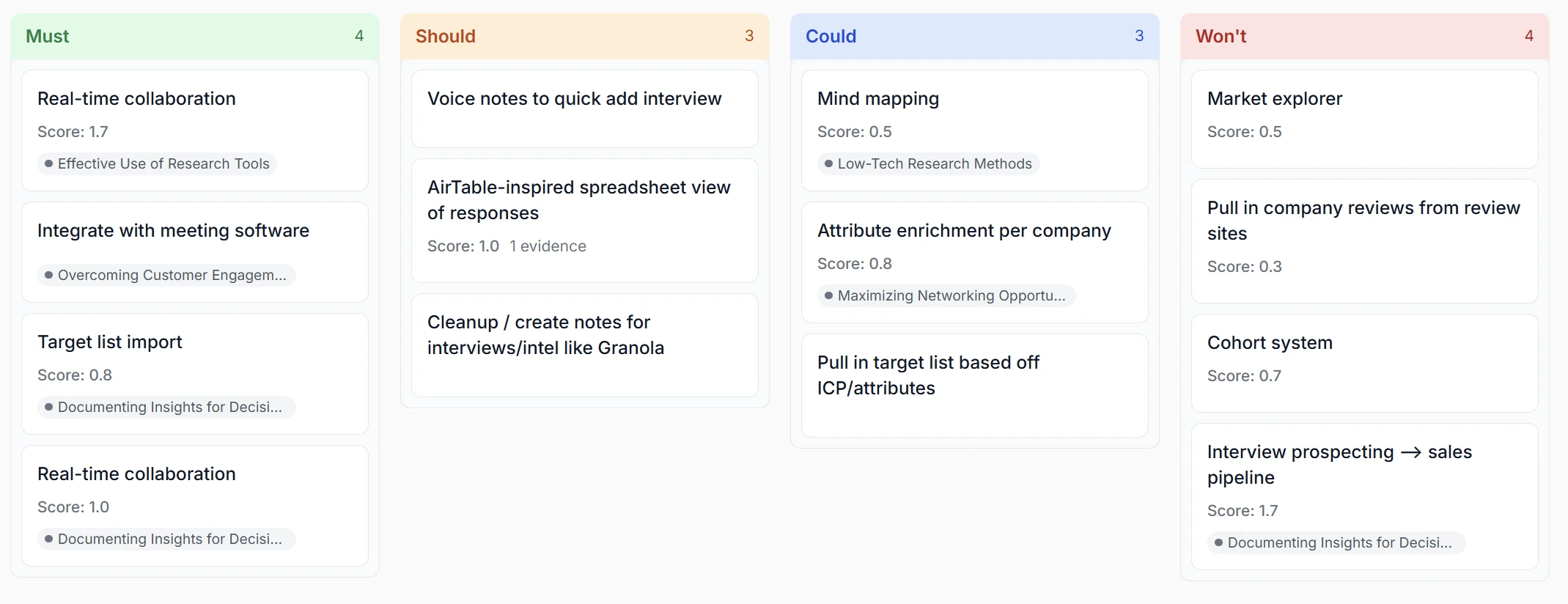
Impact-vs-effort scoring plus MoSCoW roadmap views
Built for founders and PMs — no dedicated researcher required
30-day free trial, no credit card
Limitations
Not a delivery tool — pair with Jira or Linear to ship
No timeline or Gantt views for release planning
Won't help if your roadmap problem is purely presentation
app.intervool.com/roadmap
Scores derived from how often a problem actually came up.
app.intervool.com/features
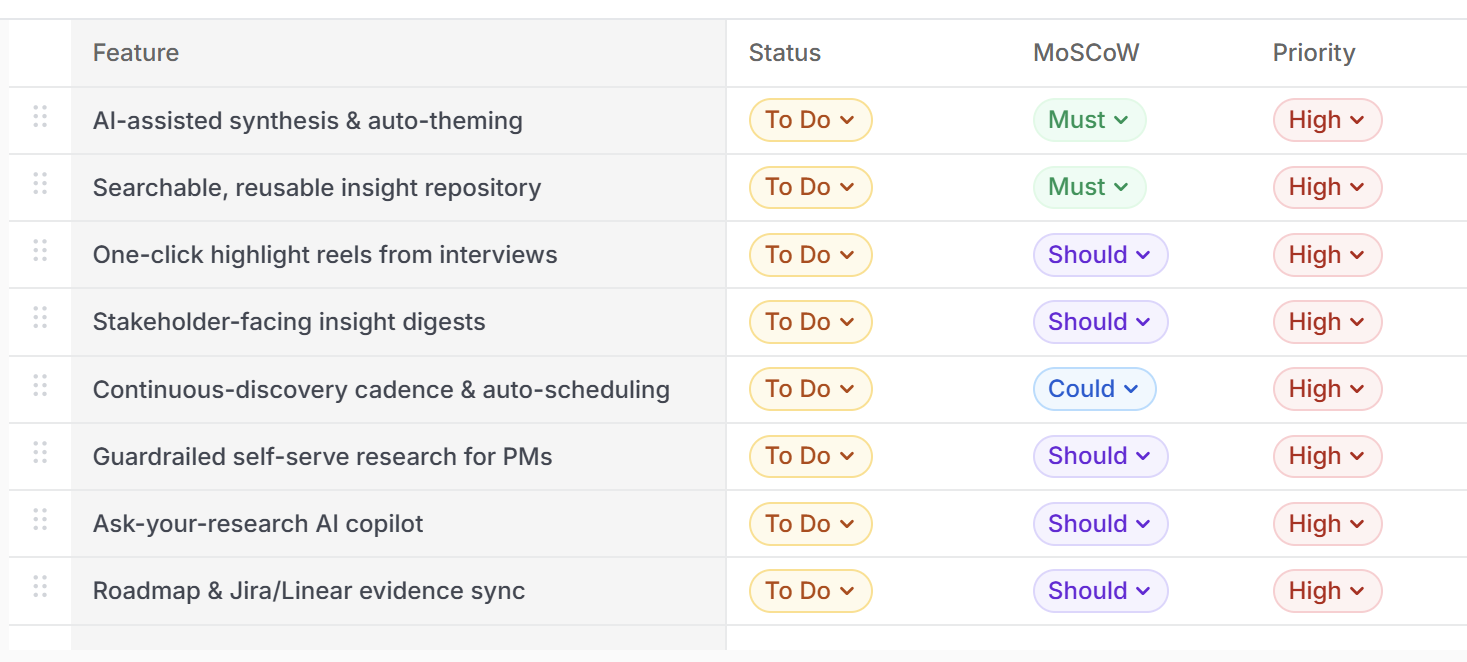
Each feature linked to the findings that justify it.
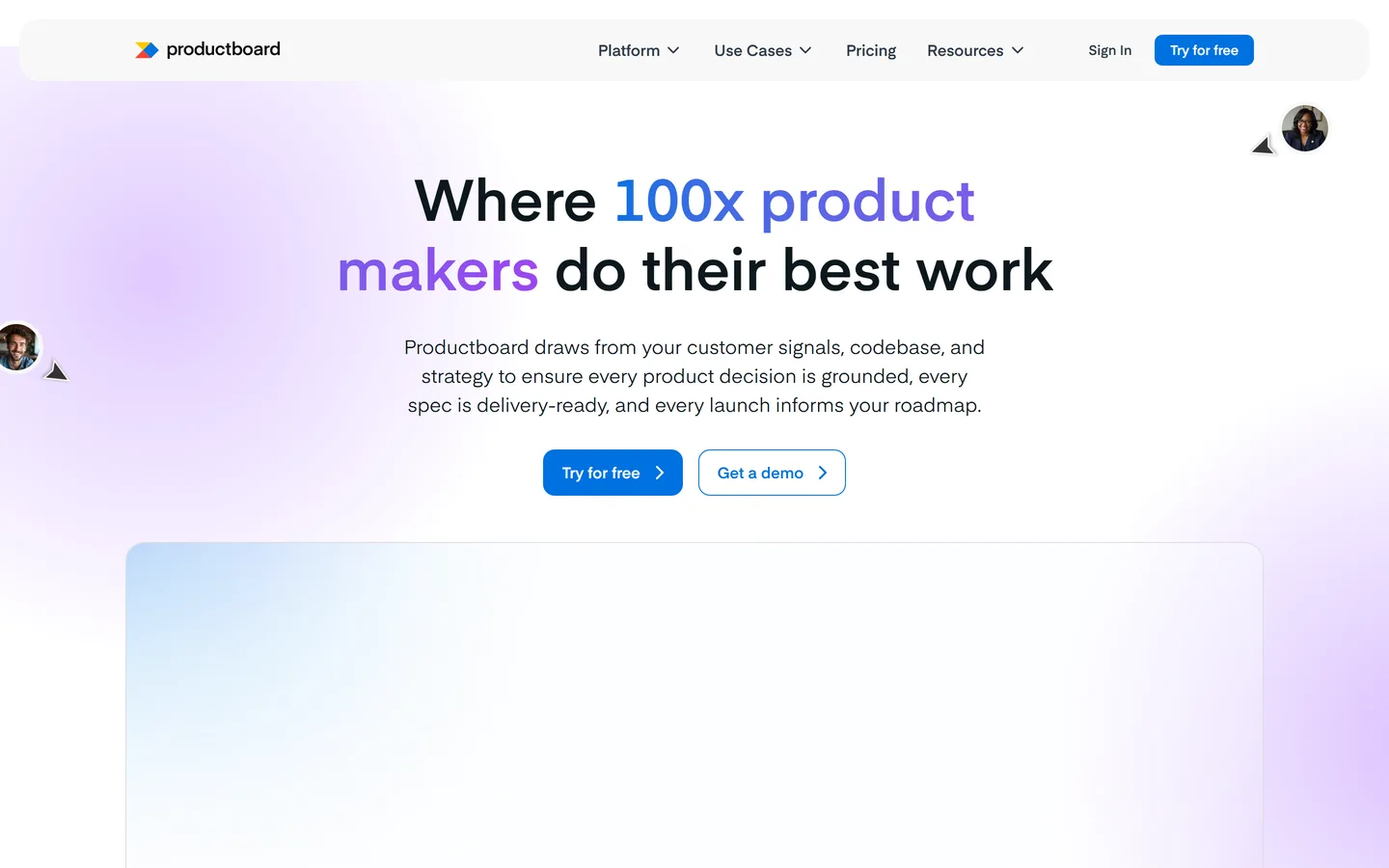
Productboard collects feedback from support, sales, surveys, and customer portals, links it to features, and helps PMs score and communicate a roadmap. It's the market leader for feedback-driven roadmapping and the default choice for mid-size product organizations. The feedback-to-feature linking is largely manual — someone reads each item and attaches it — and that ongoing work is the real cost of running it well.
Best for
Product orgs centralizing feedback from many channels into roadmaps
Pricing
Spark from ~$15/maker/mo (annual), ~$19 billed monthly
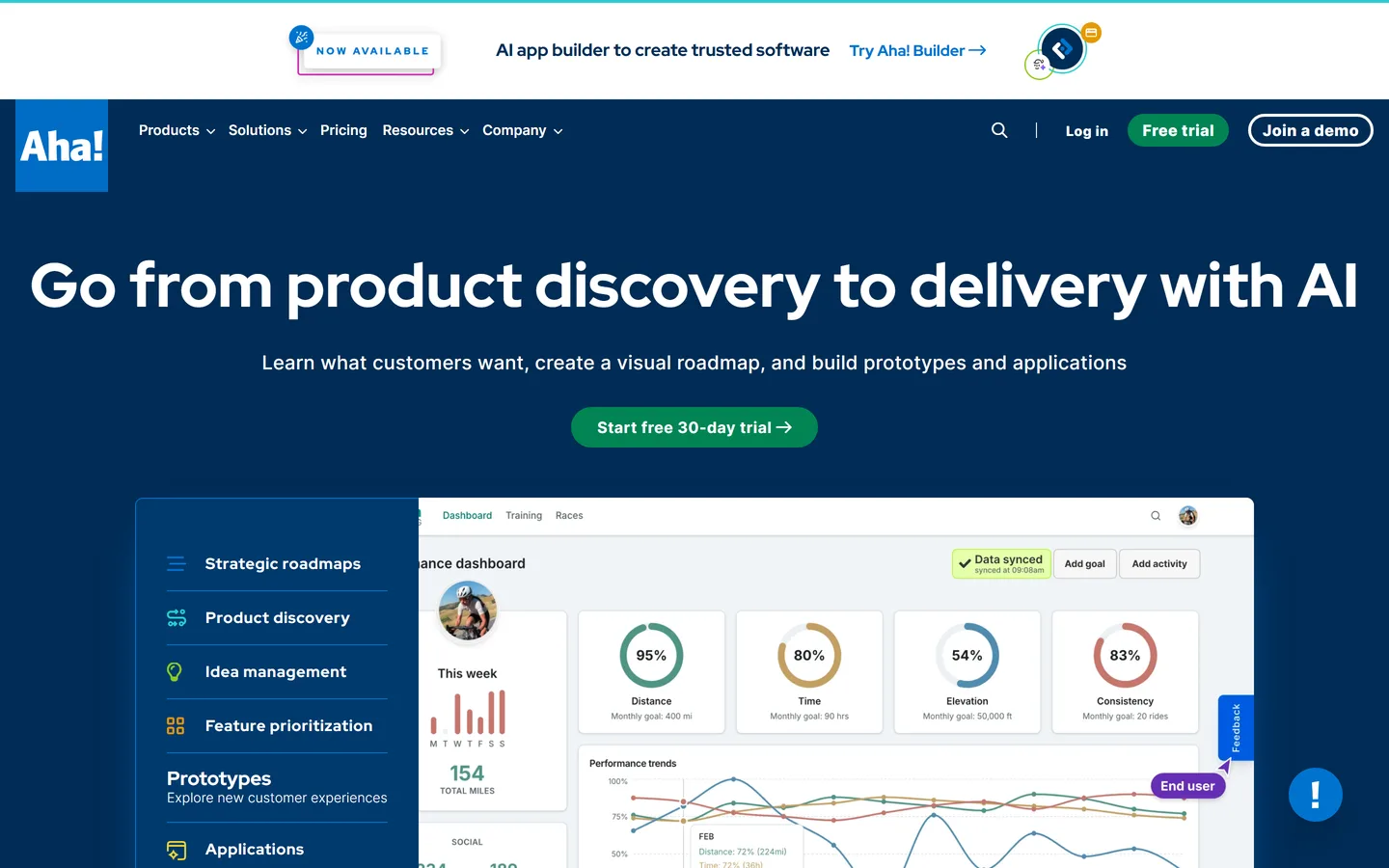
Aha! Roadmaps spans goal-setting, idea management, roadmapping, and release planning — the most complete suite in the category by some distance. If you need product strategy documented, linked to initiatives, and traced through to shipped releases, nothing else here covers as much ground. That completeness is also its cost: it's deep, structured, and takes real effort to adopt properly.
Best for
Larger orgs wanting strategy, ideas, roadmaps, and releases in one system
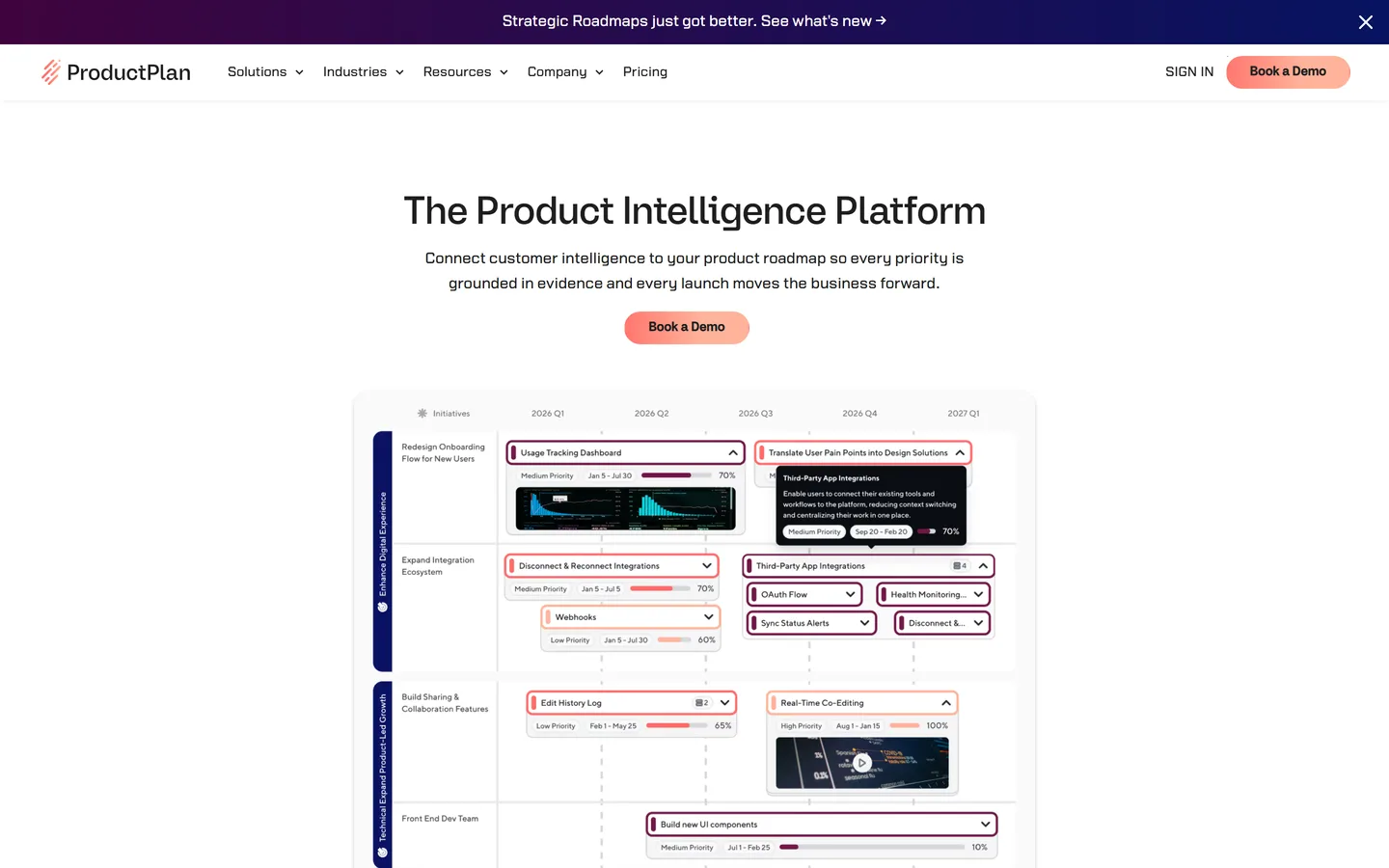
ProductPlan is built around drag-and-drop timeline and swimlane roadmaps that are quick to build and easy for non-PM stakeholders to read. If your recurring problem is producing something presentable for a leadership meeting, it solves that faster than anything else here. Prioritization logic and customer evidence live elsewhere — it presents a decision rather than helping you make one.
Best for
PMs who mainly need to communicate the plan to stakeholders
Modular roadmapping with built-in prioritization frameworks
airfocus.com
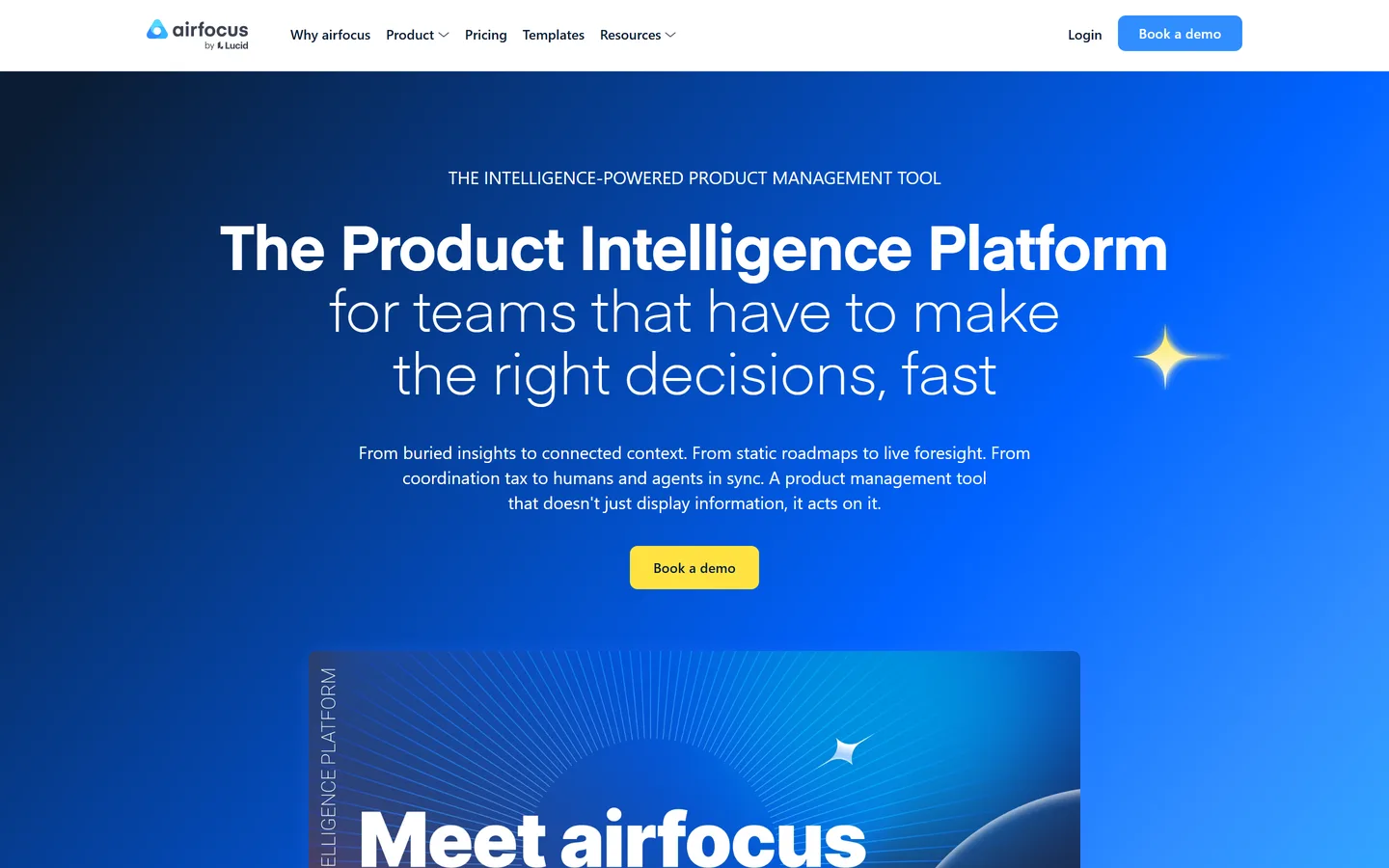
airfocus is a modular product management platform with the strongest prioritization frameworks in the category — weighted scoring, RICE, and custom formulas — plus roadmap views and feedback capture. The modularity is genuinely useful: start with what you need and add pieces later. A scoring framework is only as good as its inputs, though, and airfocus scores whatever you type into it.
Best for
Teams who want configurable scoring inside their roadmap tool
Pricing
Quote-based — airfocus no longer publishes list pricing
Free option
Free trial only
Strengths
Best-in-class prioritization scoring frameworks
Modular — start light, add apps as needed
Good roadmap visualization options
Limitations
Scores are only as good as the inputs — no research synthesis
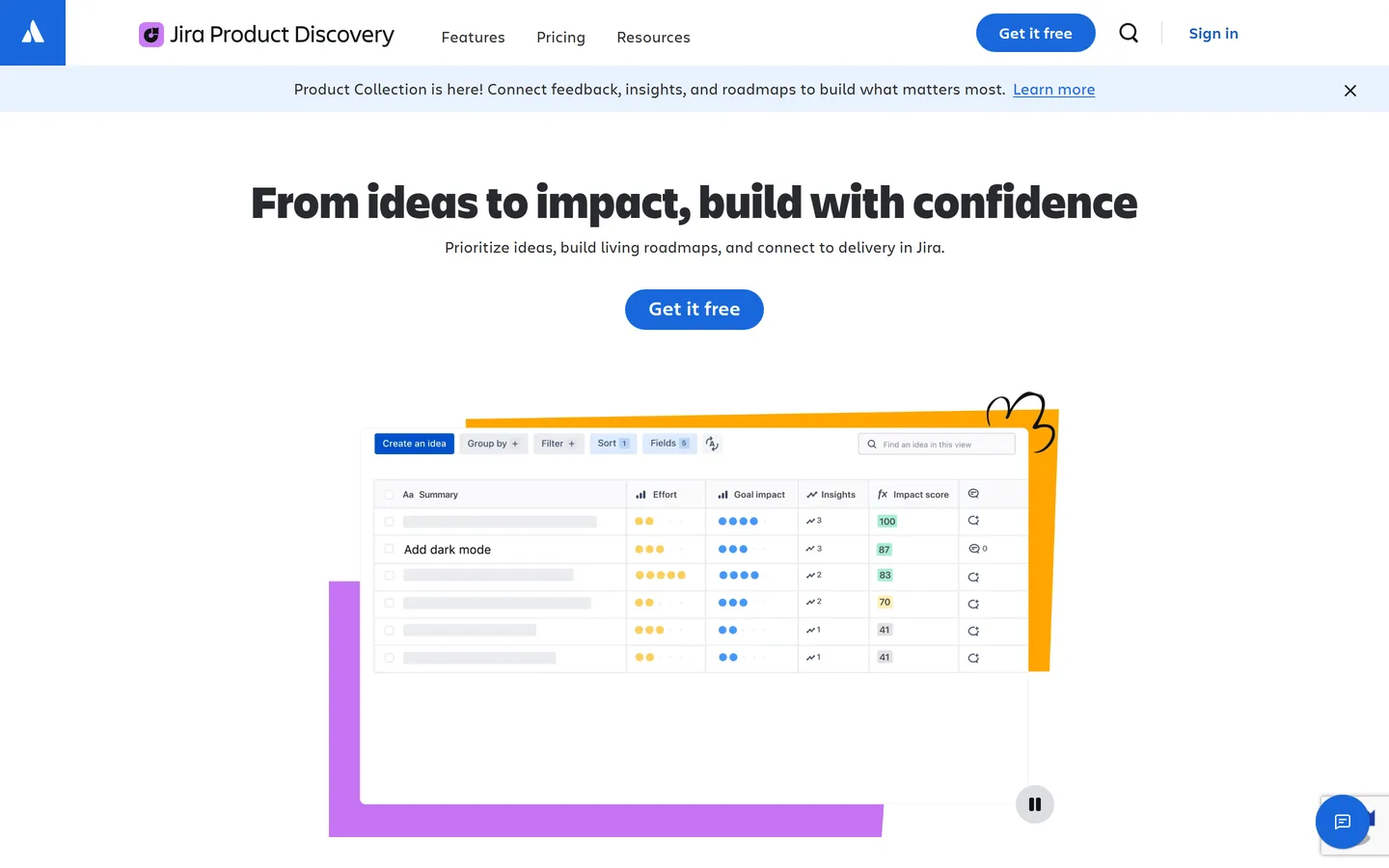
Jira Product Discovery lets PMs collect ideas, attach insights, score them with custom fields, and connect the winners straight to Jira epics. For an organization already committed to Jira it removes the usual gap between what was decided and what got built, and it's free for up to three creators. Insight capture is manual — notes and links someone pastes in — so the evidence behind a score is only as good as the effort spent assembling it.
Best for
Teams already living in Jira who want discovery and delivery linked
Pricing
Free up to 3 creators; from ~$10/creator/mo
Free option
Free forever for up to 3 creators
Strengths
Native connection between discovery and Jira delivery
Flexible roadmap visualization, now sold as Tempo Strategic Roadmaps
roadmunk.com
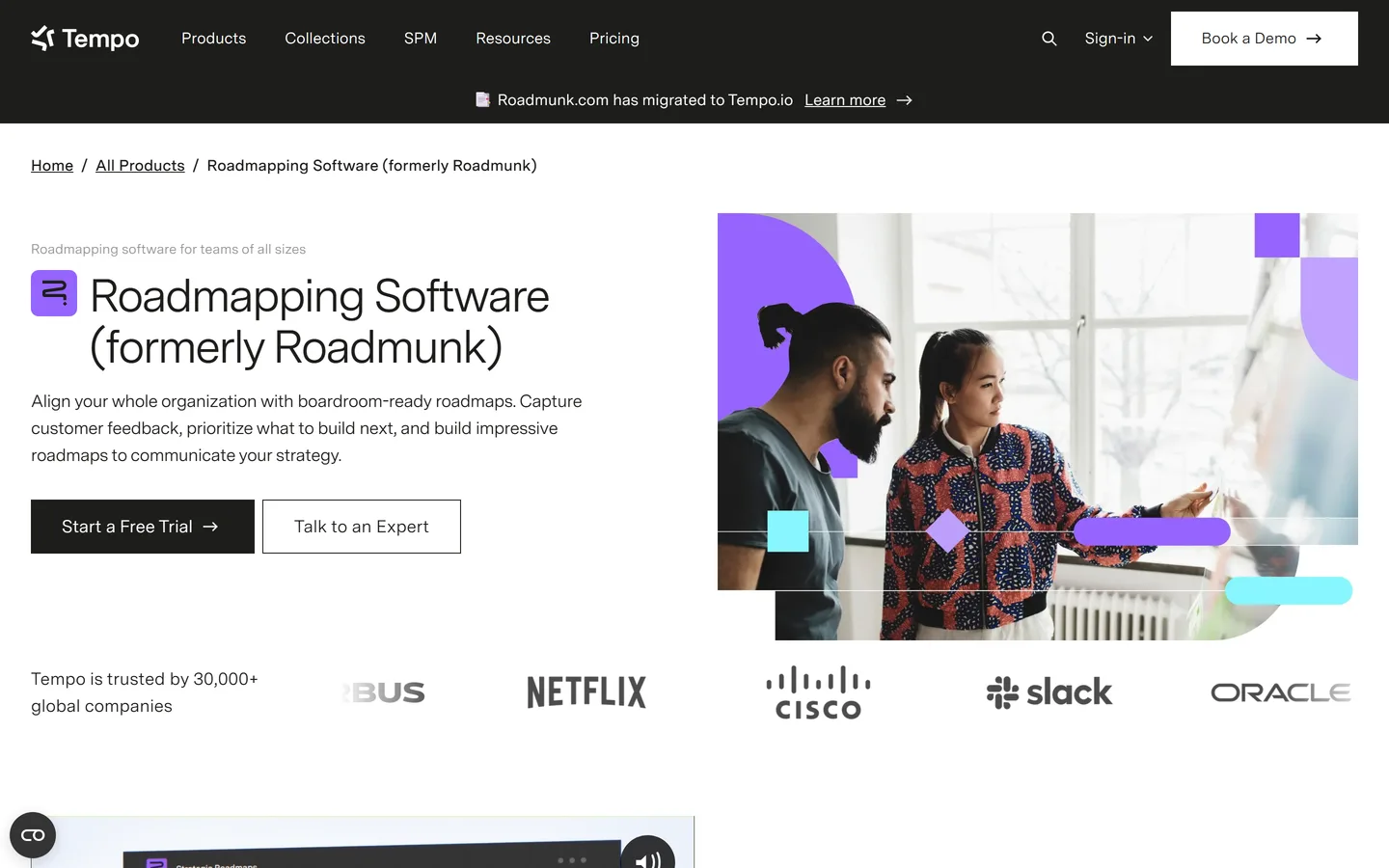
Roadmunk produces polished timeline and swimlane roadmaps and lets you generate audience-specific versions of the same plan — one view for the board, another for engineering. Tempo acquired it in 2022 and now sells it as Strategic Roadmaps; roadmunk.com has been folded into tempo.io, so buy and evaluate it there. Its strength is presentation; the thinking behind what's on the roadmap happens before you open it.
Best for
Teams who want boardroom-ready roadmaps in multiple formats
Pricing
Quoted through Tempo as Strategic Roadmaps; historically from ~$19/user/mo
Free option
Free trial only
Strengths
Multiple polished views from one roadmap
Audience-specific versions without duplicating work
Idea capture with basic prioritization
Limitations
Prioritization is light
Not connected to customer research
Absorbed into Tempo's suite; limited recent investment as a standalone product
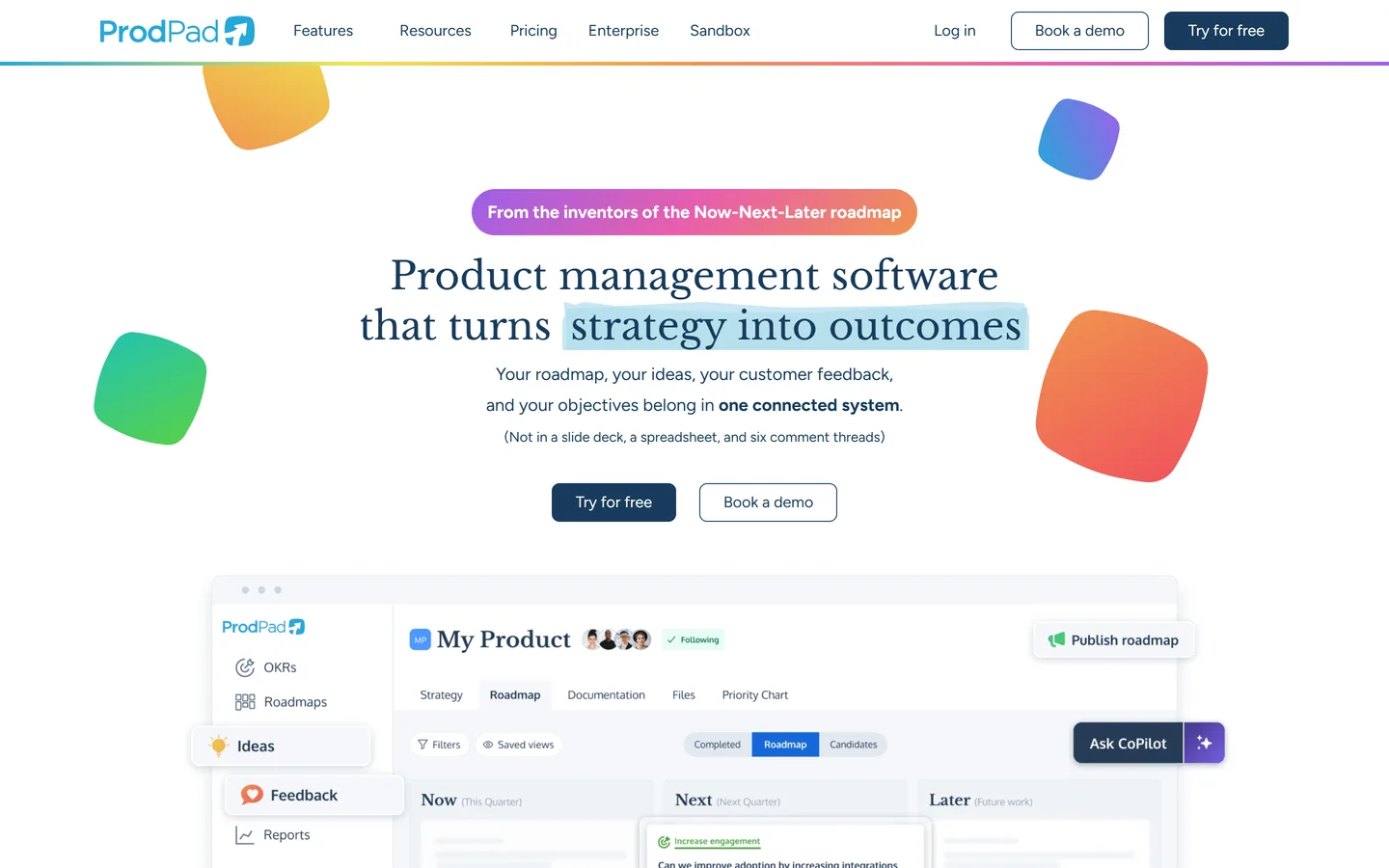
ProdPad popularized the now-next-later roadmap and pairs it with idea management and feedback capture. The format itself is the reason to choose it: committing to outcomes in rough time horizons is more honest than a date-stamped feature timeline nobody believes. Feedback linking is manual, and the tool assumes you've already worked out which outcomes matter.
Best for
Teams who want outcome-based roadmaps instead of feature timelines
Fast issue tracking with roadmap and initiative views
linear.app
Linear is an issue tracker with roadmap, project, and initiative views layered on, and it is genuinely the fastest tool in this guide to use day to day. For an engineering-led team it removes the gap between the roadmap and the work entirely — they're the same objects. It's built around execution rather than discovery: there's no feedback capture or research layer, and the roadmap views assume you already know what to build.
Best for
Product-led engineering teams who want planning and delivery in one tool
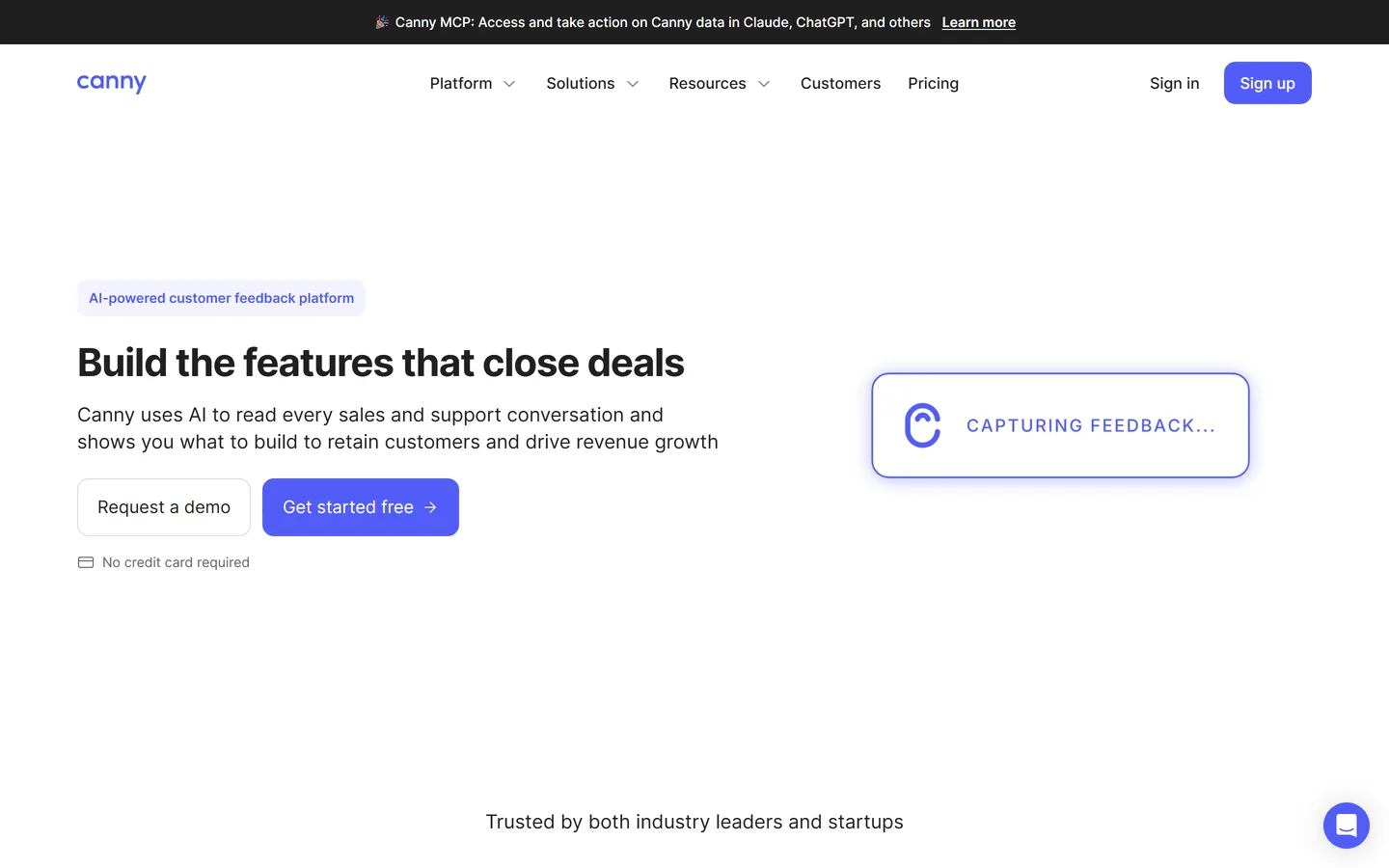
Canny gives customers a public board to post and vote on feature requests, with a public roadmap and changelog attached. As a customer-facing artifact it's excellent — people like seeing their request acknowledged and moving. As a prioritization mechanism it inherits the voting-board problem: counts measure who showed up, not what matters most, and a vote tells you nothing about why.
Best for
Teams who want customers voting on features and seeing a public roadmap
Most roadmap tools are communication tools, and several of the best are nothing else. Each entry says which half it solves, because a team whose roadmap is contested doesn't need a prettier timeline.
We asked what the priorities are based on
Every tool here can rank a list. Far fewer connect that ranking to anything a customer said, so the first grid column tracks whether items trace to real evidence or to someone's estimate of impact.
We checked the gap to delivery
A roadmap that drifts from the tickets stops being true within a sprint or two. We marked which tools connect to the engineering work and which leave you maintaining two versions of the plan by hand.
We priced for small teams honestly
Per-editor and per-maker pricing is the norm here and it scales badly. Where an entry plan is realistically under $50 a month we marked it, since several well-known tools cross four figures a year before a small team has finished onboarding.
Pricing checked August 2026, and we're not neutral
Published prices as of August 2026, rounded; enterprise tiers are negotiable. Intervool is ours and is marked as such — it scores 'no' on timeline views and delivery links because it genuinely stops at a prioritized backlog, and the tools we'd pair it with are all listed here.
FAQ
Common questions
What are the best product roadmap tools?
It depends where your roadmap gets stuck. For deciding what to build from customer evidence, Intervool. For full roadmap suites, Productboard or Aha!. For lightweight visual roadmaps, ProductPlan, Roadmunk, or ProdPad. For roadmaps tied to engineering delivery, Jira Product Discovery or Linear. Many teams pair a prioritization tool with a planning or delivery tool.
What's the difference between a roadmap tool and a project management tool?
A roadmap tool answers what to build and why — prioritization, strategy, and communication. A project management tool like Jira, Asana, or Linear's issue tracker manages how the work gets done. The best stacks separate the two: decide with a roadmap or prioritization tool, ship with a delivery tool.
How do I keep a product roadmap evidence-based?
Ground every roadmap item in customer research: synthesize interviews into themes, track how often each appears and for which segments, and keep every priority linked to the underlying quotes. Tools like Intervool automate this, so each roadmap bet stays one click from the customer evidence behind it and survives being questioned in a planning meeting.
What's a good Productboard alternative?
For lighter, more visual roadmapping: ProductPlan, Roadmunk, or airfocus. For delivery-linked planning: Jira Product Discovery. If your gap is deciding what to build from qualitative research rather than aggregating feedback, Intervool grounds prioritization in customer interviews instead of vote counts and tagged feedback items.
Are there free product roadmap tools?
Jira Product Discovery is free for up to three creators, Linear has a genuinely usable free tier, and Canny's free plan covers a small public board. A spreadsheet or Miro board visualizes a simple roadmap for nothing. Free tools handle visualization well; what none of them give you is a defensible way to decide what belongs on the roadmap.
Do small teams need product roadmap software?
Small teams need prioritization discipline more than they need Gantt charts. A founder or single PM gets more from a tool that turns customer conversations into a prioritized, evidence-linked list than from an enterprise suite — the visualization can live in a doc or a spreadsheet until the team is large enough that communicating the plan is a real job.